
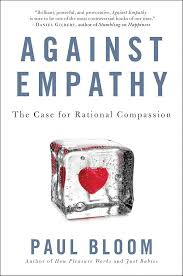
I’ve learned that being against empathy is like being against kittens—a view considered so outlandish that it can’t be serious. It’s certainly a position that’s easy to misunderstand. So I’ll be clear from the start: I am not against morality, compassion, kindness, love, being a good neighbor, being a mensch, and doing the right thing. Actually, I’m writing this book because I’m for all those things.
-Paul Bloom
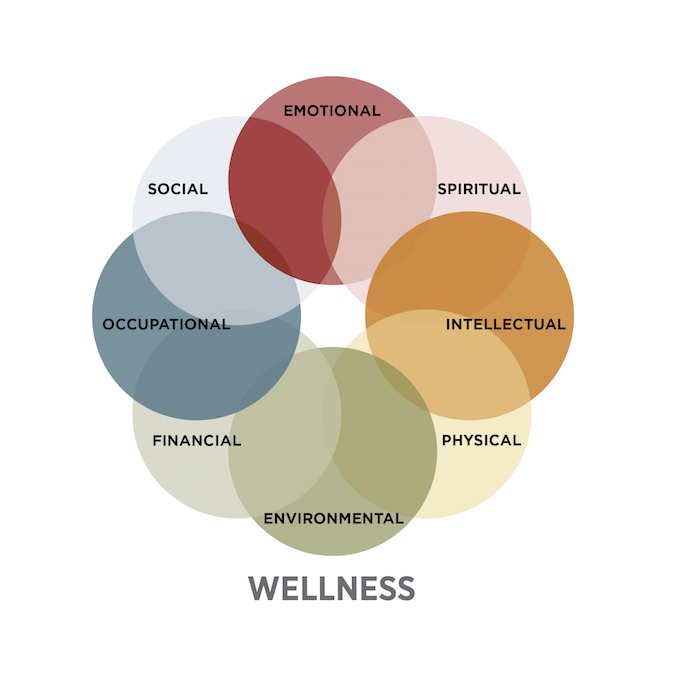
A lesson in overall wellness.
As an Amazon Affiliate it is policy to inform you that this is an advertisement. However, this is still a reflection of a great book that I’ve read many times over. I believe it would benefit any who may read it. You can find the link for it in my references located at the bottom of this page.

The world is not a simple place…
Every campaign needs a moral code of ethics. Every choice you make will have its consequences. How do we know if we are doing the right thing? This question is mainly in regard to how we deal with other people. Is doing the right thing really as simple as putting yourself in another person’s shoes? Should empathy be a part of everyone’s moral code? Is it truly that easy to be a good person? What I have to say might suprise you a bit. It’s likely that whenever I decide to boost a post from this series, I’ll be primarily inviting attacks on my character, prompting insults such as pseudo-intellectual, downright autistic, political shill, or (my personal favorite) evil. You know, the sort of shallow contributions that mean so much to me. But I hope to start at least a few deep conversations as well. I’m sure there are people more qualified than me who would disagree with my sentiments. And if they ever come forth, I will meet their challenge head-on as best I can.
Let me be clear that I’m not calling empathy a bad thing. I’m just saying that it gets in the way. It interferes more than it helps. To move forward, I must be sure that we have the same definition of empathy. Empathy is another one of those words that have become so overused that it has lost a lot of its meaning. The definition of empathy has changed slightly over the years, but there have never been more than two functions: to think how another would think and to feel how another would feel. I prefer one function over the other, and there are useful applications of each, but I will identify the issues with both. In detail.
Empathy is when you narrow your scope to one person. It’s when you mute your personality to put yourself in someone else’s shoes. Empathy is tricking yourself into believing you know what someone else is thinking. Empathy is not your capacity for love. It is not your moral compass. And it has nothing to do with being kind. An empath would fool you into believing they are loving people. This isn’t to say that an empath couldn’t be a loving person, but they most likely consider empathy as a major component. This is not true. During our spiritual briefings, I hardly mentioned empathy at all. Being an empath doesn’t make you any more or less loving. During our intellectual briefings, I encouraged not using it because you wouldn’t be using your imagination in a productive manner. Rational thought plays a critical role in morality. It’s harder than you think to be a “good” person. Because of virtue signalers and other charlatans, we think that being a good person is something you could “just do.” Any calculation or profit behind your actions would paint you in darker colors. I understand how my perspective on empathy could be considered heartless or diabolical. This is because you have the wrong idea about empathy. I’m here to fix that. I truly believe that by spreading this information, I am making the world a better place.
For those reading this who may sense some sort of political agenda behind this briefing, I can fathom why someone would think my political alignment is with the conservatives. Personally, I am a centrist. Not because I have difficulty picking a side, but because I have smoke with both. I would likely form my own party if I were active in politics. Despite what people like to believe, empathy is present on both sides of the political spectrum; it isn’t solely a liberal trait. If you are a politician, you need to be able to relate to someone. Empathy won’t tell you who you should vote for. No matter your political views, we can all ban together in the war against empathy. Political debates can be entertaining, but it isn’t something I wish to engage in with any of you. I will never tell you what to think. I always encourage thinking for yourself. So do not take my shit as gospel. If you disagree, then by all means, tell me. Send me a message or leave a comment. It’s that sort of audience I’m trying to cultivate after all.
It’s not that one side is more empathic than the other. They empathize with different types of people. No matter which argument you align with between the liberals and the conservatives, each side will have an argument based on empathy. For example, take abortion laws into consideration. The left would focus on how the mother would feel about giving birth and the circumstances of her pregnancy, while the conservatives would focus on how the unborn child might feel about being born and the consequences of a life that has been lost. Or what about gun laws? The left would empathize with those who have been harmed by gun violence, while the right would empathize with those who are concerned about protecting themselves. Neither side makes it any easier. What is the right thing to do? If you are one of those people who simplify liberals as empathetic progressives and conservatives as authoritarian cold logic, then your views on politics are severely short-sighted. You’re one of those people who shouldn’t be allowed to vote. An empath, in other words.
Empathy makes the world worse…
Would the world truly be a better place if we all got along? Is peace the same as the absence of conflict? No. This world thrives off the contributions of those who compete. Origniality would cease, and there would be nothing to aspire to. Life would become complacent and boring. Resources would become scarce and progress as we know it would come to a halt. This is apathy. This is nihilism. This is not peace. Just like how manipulation isn’t necessarily a bad thing, empathy isn’t necessarily a good thing. In fact, empathy makes you easier to manipulate. Empathy makes you ignore the consequences. If you had absolute power and made decisions based on your empathy, you would completely destroy the world. You could even apply this argument towards religion. The whole point of religion is to bring yourself closer to God, right? Would you consider God to be an empathic being? Explain the chaos he allows to be a part of your life. Why do bad people tend to outlive the good ones? How do the worst of us seem to get away with the wildest shit? If God were empathic, wouldn’t he intervene more often?
Empathy can influence us to do good, but only when we can see the consequences affecting us. Our desire to avoid pain would extend to them. A lack of empathy is usually brought up when someone has been victimized or violated somehow. Someone has to be “wrong” to prompt discussions about empathy. This makes it easy to view someone with a lack of empathy as evil. Just because someone doesn’t feel or believe in the same things as you do, does this make them an evil (or flawed) person? Many of us like to believe so, ignoring the irony of the question. But what about the problems that have no victims to empathize with? Such as those who abuse the laws or the changes in the climate? There are plenty of things that must be done for the greater good that do not require empathic reasoning. Take issues such as slavery and women’s suffrage. In the past, it was believed to be a God-given right to own slaves. Eve was only supposed to be a companion for Adam. Did you think that developments came about through a questioning of morals and humanity? No. Developments came about once the consequences became clear. The same can be said about any major progression in history.
What is right or wrong is more of a matter of consequences than morality. Imagine a scenario where one must die to save hundreds. Empathy could possibly cloud your judgment in such a scenario. The right thing to do is often a difficult conclusion to reach. The future is unpredictable, and the consequences of your choices could take a long time to come full circle. How do you know for certain that you are doing the right thing? Morality is about limiting the consequences of our actions. The less damage you cause, the more on the side of morality you are. The less responsibilities you have, the less your morals come into question. The weaker you are, the more empathic you are likely to be. An empath is almost always a weakling. How much empathy you display determines whether or not your kindness is interpreted as weakness. It wouldn’t be a mistake. Why is an empath weak? Because they believe in fairness. Only someone who is weak would judge an action as fair or unfair. Someone who is strong understands that nothing is fair, and only the consequences of our choices matter. I’m not making an argument against emotion. You are free to feel however you wish about whatever you want. It’s only a problem when you are feeling how someone else might feel. I am not making a case against your emotions. I am warning you about letting others influence your emotions. Empathy will make you forget that there is more than one side to the truth. Morality always depends on reasoning. Making an accurate judgment depends on your level of reasoning. Why would we limit our perspective to such a critical degree?
Empathy clouds your judgement…
How does empathy work anyway? It’s usually something we can’t help. Empathy relies a lot upon our senses, primarily sight. Have you ever wondered why pretty privilege is such a powerful blessing? Have you ever noticed how you never find anyone who is handsome and homeless? That’s because you are likelier to empathize with the people who are easier on the eyes. We don’t necessarily have to be attracted to the people we empathize with. If we see someone smash their finger or take a nasty fall, we would wince in pain as if we have experienced it ourselves. The things we hear also play a role on our empathy. When we hear a shriek of terror or someone wailing in pain. We would either rush towards the direction or (most likely) avoid it, depending on the situation. We also rely on our sense of smell. It’s harder to place yourself in someone’s shoes, if the shoes smell like shit. Proximity also plays a role in empathy. Imagine hearing about a nasty traffic accident occurring in your hometown. Now imagine witnessing it firsthand. Now imagine it happening, but in a different country. You felt different levels of empathy, didn’t you? Empathy is also based on your biases. To illustrate this, let’s consider racial biases. I may be able to empathize with a black kid who is down on their luck and made bad choices, but its a bit tougher for me when considering the hardships of any other race. You’re lying if you’re telling me that it isn’t the same for you and your particular race. We are much less likely to demonize our own people. The challenges you face must be identical. You must have something in common. If you cannot picture yourself in a similar situation, you will be unable to empathize with them. But you shouldn’t be doing this anyway. Emapthy makes you subjective and chauvinistic.
How do we know if we are dealing with someone who is too empathic? A major prerequisite is that the person has no idea what is happening. We have a tendency to be kinder when we are aware of other people watching. Once you are sure they are unaware of the assessment, check for empathy by watching their reactions to a certain story. You should be able to understand a story without relating to it. Are they putting themselves in the shoes of the main character? For example, are they talking about what they would’ve done if they were in that situation? You can also out an empath by spotting their reluctance to pick a side. Indecisiveness is a dead giveaway. An empath is also likely emotionally fragile. How outraged are they when they witness a misdeed? How easily offended are they? How condescending are they towards the people they cannot relate to? Watch for the emotions they cannot control. Empathy also has no place in an emergency. You wouldn’t have the time to consider what someone might think or how someone might feel. You would do what had to be done regardless of anyone’s input. Because it isn’t the suffering that matters, it’s the consequences of allowing it to happen. Because it was the right thing to do. Finally, train your ears for the word “we.” Empaths make frivolous use of the word “we.” Like, what do you mean “we?” Where did “we” come from?
I walk right past the pretty girl sitting outside of the pharmacy asking about making a donation to “save the kids.” I drive past the hungry homeless guy during my lunch break every afternoon. What of it? Why would I do that, right? Because fuck em? Not entirely. It’s because chances are, giving without any critical thought behind it, would most likely make things worse. Good people often donate to charities without actually knowing where their money is going. You just saw the hungry kid or the dog with a missing leg. You heard the sad story and the depressing music. Did you ever stop to think that these charitable organizations might actually be the ones abusing them? If I gave the homeless man some spare change, wouldn’t I just be enabling his panhandling? The notion of money being donated to charities being better than buying the useless crap we like is no more than self-righteous thinking. You believe that easing your guilt and easing their suffering are one and the same. So what am I trying to tell you? Does giving actually make the world worse? Yes. But only if you don’t put any critical thought into it. If you wish to contribute to a cause, do your research first. There are genuine charities out there, but you have to know for sure how they impact the lives of those less fortunate. Doing the right thing normally takes a bit of effort.
Empathy frequently takes the credit of virtue and enlightenment. To some, it is considered to be in the same realm of altruism. But it is nothing like the others. Virtue is contribution within reason. And enlightenment is thinking outside of yourself. Both virtue and enlightenment require a broader scope, unlike empathy, which relies on projection to narrow our focus to the extent of tunnel vision and short-sightedness. It’s hard to call anyone an evil person because most of us would like it if the world were a better place. As a storyteller, there are two things I cannot stand. The first is the morally incorruptible protagonist. Just like it’s popular to hate a villain who is evil for the sake of being evil, I can’t get behind a protagonist who is good for the sake of being good. Because it isn’t realistic. It’s supposed to be the flaws that make a character real. In reality, someone like this would be a hypocrite, a trauma victim, or a major buzzkill. The other thing I hate just as much, if not more, is the sympathetic villain. The point of their story is ALWAYS “how would you feel if this happened to you?” You see it all the time now and I’m tired of seeing this creative bankruptcy. What happened to the justified villains? The type of villains who technically didn’t do anything wrong. Villains like Magneto, Scar, or Thanos. The kind of villains that make you realize that there are no heroes. The justified villains are my all-time favorite sort of villain because they are the best representation of how the real world works. This is how you actually spark conversations about morality, none of this sob-story trauma dumping crap. Empathy makes you less realistic. Empathy is why everything sucks now.
Empathy does not make us better people…
What makes a person evil? A popular answer for that question is someone with a lack of empathy, but usually, it’s the other way around. It isn’t a lack of empathy that makes someone evil. Evil’s twisted nature comes from our own sense of morality. Morality is such a vague and malleable word. Most evil people are not cruel or violent out of a sadistic pleasure. It’s because somewhere deep down, they believe that they did the right thing. Imagine the suicide bomber who would be considered a terrorist to their enemies but a hero to their own country. Heroes will always have some “moral” behind their actions. Empathy and evil have something in common. Moralizing. Just like an empath, an evil person will find a way to justify their actions, no matter how heinous. Radicalization is another way to look at moralizing. It is where empathy meets evil. Radicalization can lead to riots, racism, assassinations, insurrections, pointless wars, and genocides. How do you think The Holocaust got as crazy as it did? I’m willing to bet that empathy had a lot to do with it. Once radicalized, you will begin to enjoy the pain of others. Because they “finally see how it feels” or because it was “the least they deserved.” You might even participate in the violence just so that you can feel that you contributed to a just cause. Radicalization is how a hero is born. So am I trying to call empathy and evil one and the same? No. Again, empathy isn’t good or bad. What I’m trying to say is that empathy won’t keep you from your darker impulses.
There is a slight correlation between someone’s capacity for empathy and personality disorders. Sure, there is some neuroscience we could get into there, but the shape of your brain isn’t necessarily a determining factor of mental instability. It’s harder than you think to determine if someone is a psychopath or not. The best measurement tool we have is a behavioral chart. A glorified list of undesirable traits. Maybe this person isn’t a psychopath, maybe he’s just an asshole or a misunderstood genius. Who knows? Still, what we do have is better than nothing, I suppose. But the one thing that most would like to assume is that psychopaths have a lack of empathy. We cannot claim this with certainty. It’s not that psychopaths lack empathy. They have issues regulating any of their emotions. What makes a psychopath isn’t a lack of empathy it is mental instability. Tapping into empathy wouldn’t make a crazy person any less crazy. And what’s to say that a psychopath can’t follow a moral code? They aren’t stupid after all. Life is a game to them, but they will at least play their part if it means something to them. Psychopaths are people, too. And sometimes you need crazy bastards.
Empathy doesn’t stop you from being evil or crazy. It doesn’t even stop you from being cruel. Bullies, for example, are exceptional empaths. They know exactly how to get into your head. They can sense who would fight them back or not. You would think that feeling someone’s pain would make you run to their rescue, correct? Sometimes. Unfortunately, the usual response to feeling another person’s pain is to run away. No one likes a complainer. If I didn’t want to see you suffer, it would be much easier for me not to look at you. Problem solved as far as I’m concerned. The best way to help a broke person is not to be one of them. Bailing someone out only increases their debt. Never help someone out of pity. Do so out of love, respect or concern for them.
When considering the right thing to do, it usually boils down to the consequences of our actions. Let’s take violence into consideration. Are we being too quick to demonize violence? Sure, no one wants to get hurt, and very few of us actually enjoy inflicting pain on others. But are we going too far to say that it isn’t needed? An empath may disagree with this line of thinking. Empathy isn’t too far removed from the victim mindset. Victims of violence would also disagree with what I have to say. Those who cannot defend themselves cannot grasp the necessity of violence. Of course, they would view violence as evil. Violence is as morally grey as manipulation or empathy. On rare occasions, it’s the most effective way to handle things.
Is violence truly so unbecoming of humanity? I don’t know, I really enjoy watching MMA and football. I always get a kick out of watching two hockey players slug it out. The sports and video games I enjoy wouldn’t exist without violence. What about demolition? It is technically a destructive and violent action, regardless if people are in the building or not. But doesn’t it make space for something better to be created? Another thing we must consider is protecting someone. If I caught someone I loved in the act of committing suicide, I would totally kick their ass and tie them up. What about torture? Is that ever okay? Batman would think so. If critical information was needed, if time were a factor, and the only thing that stood in the way was compliance, then it might be the right call to bust out the razor blades and lemon juice. As you can see, I’m not exactly a pacifist. I value peace, humanity, and objectivity. This is why I believe violence is necessary. You are always in danger if you are incapable of defending yourself. If it hasn’t happened already, there will come a time when you will have to fight your way out of a situation. Life without conflict is not peace. It is apathy. War is what keeps this world from falling apart.
Introspection is what stops you from going down the wrong path, not empathy. Empathy is a lot like training wheels, but for your mind. It is a simple enough learning tool for teaching children because they are incapable of weighing the consequences of their actions. Imagine a fully grown adult still using their training wheels. That is what an empath looks like to me. It is true that we are primarily self-interested and that empathy could influence us to do something for someone else’s sake. We’ve already covered as much. It is a popular belief that without empathy, nothing would motivate us to contribute. If you are one of those people, then you also probably have no idea how trust or love is supposed to work. This briefing would be easier to internalize if you did. Perhaps you are a recent follower or otherwise didn’t catch most of my spiritual meditations. If humans were driven only by self-interest, the human race would’ve gone extinct long ago. If you believe that people are animals driven by survival, you are not the type of person I’d want to be around. Because you are already dehumanizing others. You should be isolated or banished or otherwise removed. Actually, I’d be surprised if anyone wanted you around. Selfishness has more to do with maturity than anything else. Again, a child would be incapable of weighing the consequences of their actions. Incapable of accountability on their own. Yes, we start off purely self-interested. We were all greedy kids at some point. But we are supposed to grow past that. We are supposed to learn that the world is not as simple as putting yourself in someone else’s shoes. Am I addressing animals or children? I’m pretty sure that I’m not. I’m speaking to the adults who will make this world a better place.

You hate empathy more than you think…
Empathy could make you treacherous, irrational, and unprofessional. Believe it or not, it’s really hard to trust someone who is too empathic. In the past, I’ve brought up how you should strive to be a philanthropist over a hustler’s lifestyle. Between the two, which one would you think depends on empathy more? Who has the better eye for suckers, and how would you think they would know? I know what you might be thinking. “A philanthropist’s motivation to help others comes from empathy, correct?” No. What you are thinking of is compassion. Love. You don’t have to relate to someone to have compassion for them, but you might need to relate to someone before you rip them off. Where a hustler has empathy, a philanthropist has compassion. A philanthropist is an enterpriser, and empathy has no place in business. Unlike empathy, you can feel compassion towards an entire group of people. You can have love for a group of people, but you can only empathize with a handful. Obligations are often the result of empathy. We need to limit our obligations to what is important to us. If you are empathic to everyone you come across, you will soon find yourself weighed down by too many obligations.
But what about our personal relationships? Surely empathy does some good there right? Nope. Empathy screws up our relationships too. Major problems with dating today involve effeminate men and masculine women. Ever since we’ve considered being more empathic, dating has gotten worse. Once we turn off the empathy we become more like ourselves. You know how the dating gurus always tell you to be yourself? This is what they mean. We have undervalued kindness when it comes to desirable traits in our significant others. What everyone gets wrong is thinking that empathy is a necessary component of kindness. You don’t need to empathize with someone to be kind. Just like how you don’t have to be nasty with the people you can’t empathize with. Empaths are notoriously clingy. They are so afraid of not being liked, so they feel this compulsion to be included in everything. They are the people who walk around thinking they can fix everyone; always giving advice and babying them. If you refuse an empath’s help, they will dwell on it long after you have forgotten about it. In other words, an empath has no agency. Where an empath would prefer following orders, an individual with agency would rather call their own shots. Someone with agency thinks and feels whatever they wish to. They can remain a team player while moving on their own accord. Someone with agency is closer to a leader than a follower. Agency is freedom.
An empath will always take your side. This is what we should want from our friends and family, right? But what about if you are wrong? Wouldn’t you want someone to stop you if you were wrong? Does empathy make you a better friend, family member, or partner? I don’t believe it does. I personally would value a team who can think for themselves. Sure, disagreements would happen, but that’s what sharpens the mind. Everyone needs a push sometimes, but an empath would be too concerned about how you feel about it. There are times when people should feel differently. If you were in a panic, would you want the person with you to panic as well? Or would you appreciate it more if they remained calm and focused? Empathy isn’t just bad for us. It’s bad for the people we focus on as well. Sure, they get special treatment, but are they actually getting what they need? Imagine the spoiled child. But our family members, if anyone, are the few people in this world who need our empathy, correct? You wouldn’t be completely incorrect in believing that. You are supposed to give the people you love preferential treatment. But love and empathy are not the same thing. You could empathize with someone you just met. You can still love the people closest to you without empathizing with them. An example of this is being happy for the success of a family member. The keyword here is ‘for’ not ‘with.’ You are happy for them because you love them.
Fuck Empathy…
Empathy only really applies to the negative emotions. Empaths are quick to share pain and despair, but what about happiness? Do you get the same enjoyment watching someone eat instead of being the one eating? Sharing happiness is awkward. You are more likely to trigger envy than empathy. Because happiness is a problem and we shouldn’t burden others with it. We are better off keeping our joy to ourselves. This is a unique opportunity to refresh your memory about one of my favorite practices: mindfulness meditation. I’m no Buddhist, but I have a hard time disagreeing with their “no attachments” philosophy. In fact, a lot of Buddhist teachings align perfectly with my outlook on the world. Meditation separates you from the rest of the world. There is nothing but you, your thoughts, and your feelings. No one else matters during this moment. And it’s peaceful, is it not? Why? You got it! No empathy.
If you’ve made it this far, you’re probably thinking, “Damn, what isn’t wrong with empathy?” I will acquiesce that empathy does occasionally make the world a better place, in the same way that a broken clock is right twice a day. If you are facing the same challenges, empathy could bring people together, even if they are enemies. Empathy is also what makes me a better writer since I must get into the minds of my audience. It also makes my day job more enjoyable. As a fitness instructor, I enjoy watching my clients gain confidence in themselves. I get to experience that feeling of taking control of your life over and over again through the eyes of my clients. Empathy, in rare occasions, is a good thing, and it’s not like I would prefer a world without it. I just believe that we can do better. Am I really showing too much faith in human rationality? We are famously irrational beings, and the world seems to become a crazier place every day. It is true that we are predominantly emotional creatures. But does that mean that we must remain slaves to our emotions? I reject that.
I reject that we cannot be rational beings. Consider our talks of dark psychology. Everything we do is a choice, regardless of how little thought we put into it. Reactions, reflexes, responses; all of those examples are based on reasoning. This is something that every manipulator understands. Someone who is strong will also understand this. Since everyone is different, since most people are difficult to put into a box, it’s easier to claim that humans are irrational. You can never really be sure what someone else is thinking. Just because you can’t understand what someone might be thinking, would this make humans irrational beings? I just believe that is a lazy way to look at things. This is more of a case of differing levels of intelligence. Are they irrational? Or are they just foolish or ignorant? Assuming we are speaking of the average human mind, intelligence is more important than emotion. Intelligence will help you to identify the consequences where emotion will help you to ignore them. Why aren’t there more padded rooms than prisons? Why do prisoners even exist? Because they ignored the consequences. Because they made the wrong choice. Prisoners exist because the world needs fewer idiots in society. Your choices depend on your level of intelligence. If you had no idea what to do during an emergency, you would probably panic. Confidence and strategy are products of a rational mind. But can’t intelligent people also be evil? Indeed, they can be. Most evil people are intelligent, but most intelligent people are not evil. Chances are less likely you will make the wrong choice. I will admit that it takes more than a sharpened mind to reach morality. It also takes a loving spirit. If you want to know how to become a better person, it’s easy. Just read everything I’ve ever written from beginning to end. If you don’t want to spend that much time on the internet, then buy my books, support the dream.
References
Against Empathy– Paul Bloom